 Free delivery in Zurich from 40 CHF

Valerian in Persian medicine according to Avicenna

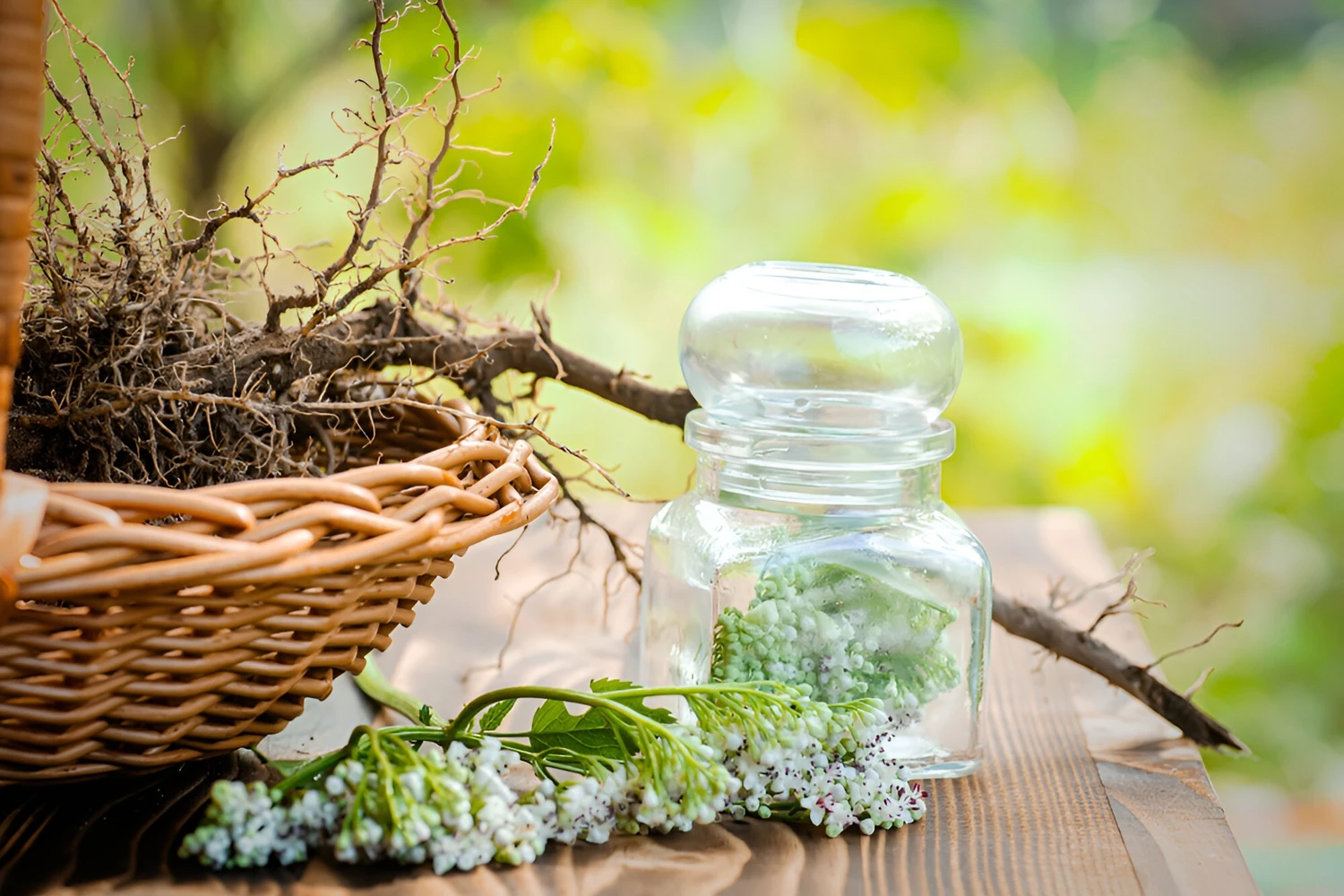
A plant promoting calmness and inner balance
The history of herbal medicine is closely linked to one of the greatest scholars of the Middle Ages: Abu Ali al-Husayn ibn Sina, known in the West as Avicenna.
Avicenna was born in Persia in 980 and is still regarded today as one of the most important physicians, philosophers and scientists in history. He was not only a physician, but also a philosopher, natural scientist, mathematician and polymath. His most famous work, ‘The Canon of Medicine’ (al-Qanun fi al-Tibb), was one of the world’s most important medical texts for many centuries and was taught at universities both in the Islamic world and in Europe.
In this work, Avicenna described numerous plants and their properties. One of the plants that played a special role in traditional herbalism is valerian (Valeriana officinalis).
Note: The following information relates to historical uses in traditional Persian and Islamic botany and should not be regarded as medical advice.
Valerian – a plant steeped in tradition
Valerian (Senbel al-Tibb) is a perennial plant with delicate pink and white flowers, the root of which has been used in herbal preparations for centuries.
In the medical texts of the Persian tradition, valerian was valued for its strong aroma and its balancing properties. Particularly the root was regarded as a valuable ingredient in many herbal preparations.
Avicenna often described plants according to their temperament – a central concept in the medicine of his time. This system was based on the idea that plants can possess properties such as warming, cooling, drying or moistening.
In this traditional view, valerian was frequently associated with balancing and calming properties.
Traditional uses based on historical sources
In Persian herbal medicine, valerian was mentioned in various herbal infusions and mixtures. Historical texts report that valerian was traditionally used in connection with:
- promoting calm and relaxation
- supporting restful sleep
- alleviating inner restlessness
- providing relief from heart palpitations and inner nervousness
- relieving tremors or physical restlessness
- providing relief from stress and mental strain
- balancing anxiety and sudden nervousness
- traditionally described as helpful for exhaustion or fatigue
- supporting general well-being
In some historical texts, valerian was also mentioned in connection with:
- cramps or muscle tension
- digestive complaints
- bowel complaints
- menstrual cramps
- headaches
- states of nervous tension
In ancient medical texts, valerian was also sometimes associated with uses for:
- depressive moods
- nervous overexcitement
- excessive sweating
- inner restlessness
These descriptions reflect the understanding of the body and nature at that time.
Valerian as a herbal tea
To this day, valerian is mainly used as a herbal infusion made from the root. Traditionally, valerian was prepared in small quantities.
Such infusions were traditionally taken once or several times a day, or in the evening before going to bed.
Traditional preparation
Pour a cup of hot water over 2–3 g of valerian root. Leave to infuse for 10–15 minutes, then strain.
Historical sources also mention a preparation consisting of:
3–5 g of valerian in approximately 150 ml of hot water, left to infuse for 10–15 minutes.
A legacy of Persian botany
Avicenna’s works demonstrate just how deeply knowledge of plants was rooted in Persian culture. Many of these plants are no longer regarded as medicinal remedies today, but primarily as part of a long cultural tradition of herbal teas and natural infusions.
Valerian is an example of how historical knowledge, botanical tradition and the modern enjoyment of tea can become intertwined.
At Swisspica, we see herbal teas not merely as beverages – but also as part of a history stretching back thousands of years, rooted in plants and culture.
A note on traditional botany
The properties and uses described here are drawn from historical Persian and Islamic botany, as handed down in the medical traditions associated with Avicenna (Ibn Sina), amongst other sources.
This information is intended solely to provide a cultural and historical context for traditional herbal uses and does not constitute medical advice or a recommendation for treatment.
People with health conditions, as well as pregnant or breastfeeding women, should never use herbs or herbal preparations for medicinal purposes on their own, but should always consult a doctor or healthcare professional first.