 Free delivery in Zurich from 40 CHF

‘Bahar Narenj’ – Bitter orange blossoms in Avicenna’s medicine

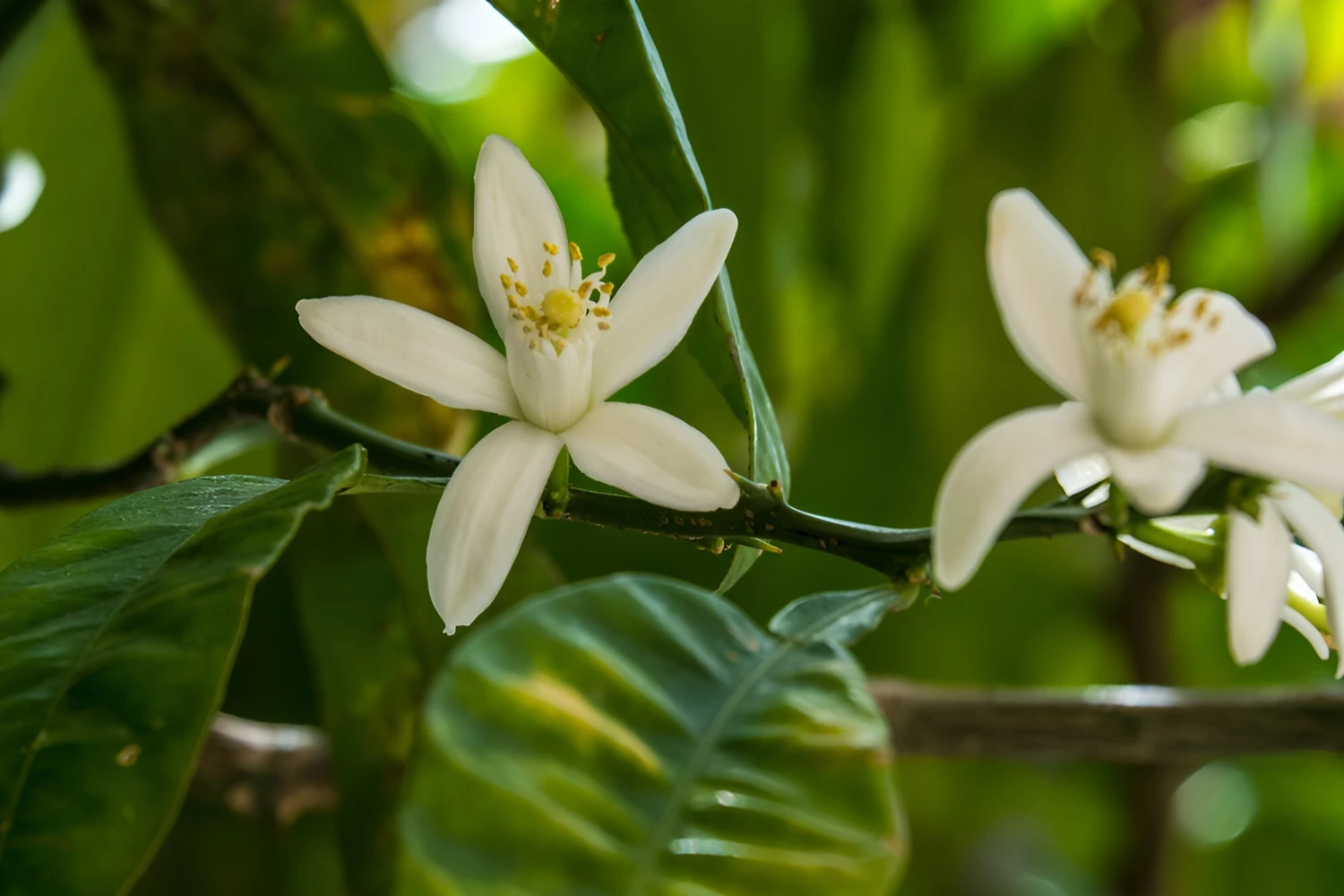
Citrus aurantium in Persian and Islamic medical traditions
Few names in the history of (Persian) medicine are as significant as the one of Avicenna, known as Abu Ali al-Husayn ibn Sina in Persian. He was born in 980 and is still considered today as one of the greatest physicians, philosophers and scientists of the (Islamic) world.
Avicenna was not only a physician, but also a philosopher, naturalist, astronomer and polymath. His famous work ‘The Canon of Medicine’ (al-Qanun fi al-Tibb) was one of the world’s most important medical treatises for many centuries and was in Europe the standard medical manual until the 17th century. He described many plants and their characteristics in it.
One plant that Avicenna described in depth is particularly appreciated in Persian culture: the bitter orange (Citrus aurantium). Its fragrant blossoms are called ‘Bahar Narenj’ in Persian.
Note: The following information relates to historical uses in traditional Persian and Islamic botany and should not be regarded as medical advice.
Bitter orange blossom – a fragrance from Persian gardens
The bitter orange tree grows in the warm regions such as the Mediterranean and Iran. In spring, it produces white, strongly scented flowers which have been appreciated in Persian culture for centuries.
These blossoms are traditionally used for:
- aromatic herbal infusions
- floral water (‘Aragh-e Bahar Narenj’)
- traditional beverages
- sweets and desserts
- natural fragrances
As soon as the blossoms open, a delicate citrus aroma with floral notes unfolds. In many Iranian cities – particularly in Shiraz, this remains part of the local culture to this day.
Bitter orange blossoms in Avicenna’s thought
Avicenna classified plants within the framework of the natural philosophy of his time according to their temperament, meaning characteristics such as warm, cool, dry or moist.
In Persian medicine, aromatic flowers are regarded as plants that may help maintain the balance of the nerves and the heart.
In traditional botany, Bahar Narenj was mentioned particularly in connection with tranquility, emotional balance and inner well-being.
Historical accounts relate that bitter orange blossoms were traditionally used for:
- inner restlessness
- nervous tension
- emotional stress
- heart palpitations
- sleep problems
Bitter orange blossoms and the nervous system in the traditional botany
In Persian herbal tradition, bitter orange blossoms were attributed a special connection to nervous system. They were referred to in connection with:
- calming the nerves
- providing relief from stress and anxiety
- promoting restful sleep
- balancing emotional tension
- providing relief from mental exhaustion
Modern research often mentions that aromatic compounds found in flowers – such as linalool and linalyl acetate – may have a calming effect on the nervous system. These compounds are also linked to the brain’s so-called GABA system, which plays a role in relaxation and stress regulation.
Traditional applications for the heart and circulatory system
In historical herbal texts relating to the heart and circulatory system, Bahar Narenj is also mentioned.
Traditional descriptions include, among other effects:
- supporting a steady heart rhythm
- promoting healthy blood circulation
- alleviating emotionally induced palpitations
- supporting heart health
- restoring balance during times of stress
Bitter orange blossom in traditional gynaecology
In the Persian herbal tradition, bitter orange blossoms were also mentioned in connection with women’s health. Historical sources describe their use in:
- supporting the uterus
- relaxing the muscles
- relieving menstrual cramps
- promoting a balanced cycle
These applications are based on observations derived from traditional botany.
Bitter orange blossoms as an infusion
Nowadays, bitter orange blossoms are mainly enjoyed as a flavoured herbal tea.
The infusion is:
- mild
- floral
- slightly citrusy
- pleasantly relaxing
Traditional preparation
Pour hot water over 1–2 teaspoons of flowers.
Leave to infuse for 10–15 minutes, then strain.
This tea is traditionally enjoyed in the evening or during quiet moments.
A plant between tradition and present day
From Avicenna’s medical treatises to modern herbal teas, the bitter orange blossom has retained its special place in Persian culture.
It symbolises an era in which botanical knowledge, philosophy and medicine were closely intertwined.
At Swisspica, we see these herbs not merely as teas, but also as part of a botanical tradition stretching back millennia, which traces its origins to the great scholars of Persian medicine.
A note on traditional botany
The properties and uses described here are drawn from historical Persian and Islamic botany, as handed down in the medical traditions associated with Avicenna (Ibn Sina), amongst other sources.
This information is intended solely to provide a cultural and historical context for traditional herbal uses and does not constitute medical advice or a recommendation for treatment.
People with health conditions, as well as pregnant or breastfeeding women, should never use herbs or herbal preparations for medicinal purposes on their own, but should always consult a doctor or healthcare professional first.